
The Y Not You PodcastMarketing
The Six-Month Grand Opening Playbook
We spent six months marketing a bagel shop that hadn’t opened yet. It became the biggest grand opening in the owner’s 22 years. Here is the blitz campaign, step by step.
Key takeaways
- Start six to eight months before you open, as soon as the date is firm. Three months is the minimum.
- Run organic and paid together. Organic tells the story; paid puts the best of it in front of everyone within 15 to 20 miles.
- Film the build and put the owner on camera. People follow a story long before they buy a product.
- Repurpose your best older content with the opening date as the call to action.
- Plan for the win: stock, staff, and a follow-up offer for the weeks after opening day.
A week after the doors opened, the owner of Brooklyn Bagel & Coffee Company sat down with us and said it plainly: it was the biggest grand opening he had had in 22 years. It was his sixth store, opened in Mamaroneck, the Westchester town he calls home, and the first one he marketed entirely through social media.
None of it happened by accident. We started telling the story of that store six months before it existed, and by opening day a few hundred pieces of content had gone out across a 15 to 20 mile radius. This is how the campaign worked, and what we would tell any owner planning an opening.
What a blitz campaign is
A blitz campaign is a concentrated push toward one date. Organic content, the posts, videos and stories you publish for free and let the algorithm distribute, builds the story. Paid advertising puts money behind that content so it reaches people who do not follow you yet. On their own, each does half the job. Together, aimed at a single opening day, they build anticipation for months instead of hoping for a crowd on the morning.
The most common mistake is the opposite assumption: open the doors and people will show up. Maybe for a week. After that, a store nobody heard about is a store nobody visits.
The objection: “What is paid going to do for me?”
We had worked with the brand for three to four years by then, and its organic audience was strong. So the first question was a fair one: if organic is working, why pay for anything?
The answer was geography. The brand was built in New York City, where a store near somewhere like Chelsea Market gets foot traffic simply by existing. Westchester County is different: smaller towns, tighter-knit communities, and far fewer people who walk past and wander in. A new location in a new county meant a new audience, and that audience had to be reached on purpose.
You just shouldn’t wait till you open up to start going for it, because everyone’s going to expect people to show up on day one.
 Michael CapozziFractional COO
Tell the story before there is a store
We were definitive about one thing: if we were going to do this right, we had to show the build. We filmed pre-construction, interviewed the owner on site, and brought in people with a following in the area to ask him the questions their audiences would ask. The campaign was going to be story driven, not product driven.
That decision mattered more than any other. Plenty of people in Westchester commute into the city and already knew the brand. Plenty did not, and had never met the man behind it. In 22 years he had never really been on camera. Now they watched him build a store in their town.
What you’re doing is you’re creating a world that people can attach themselves to.
Francis VolpeFractional CMOThe six-month playbook
- Lock the date and start earlyBegin six to eight months before opening, as soon as there is a definitive date. If you can’t, give it at least three months.
- Film the build and the ownerPre-construction footage, owner interviews, and local collaborators asking the questions customers would ask.
- Stories about four days a weekInstagram Stories every other day: product, past videos and new construction footage, always with the opening date and time.
- Organic posts at least three times a weekNot every post mentions the opening. Show the product and the owner so new people find their own way into the story.
- Repurpose what already workedThe best-performing content from shoots two and three years earlier, re-cut with the opening date as the call to action.
- Push paid across 15 to 20 milesFacebook and Instagram from Mamaroneck up to Brewster, plus campaigns aimed at people who work in the city and live nearby.
- Turn it up for the final monthThe owner chose to put more budget behind the last stretch, with straight-to-the-point ads that said exactly when the doors would open.
The every-other-day rhythm for Stories was deliberate. Daily can wear people out. Four times a week, alongside the organic posts and the paid campaigns, kept the date in front of people without making the brand feel like it was shouting.
Opening weekend
The store opened on a weekend, with lines out the door. He ran out of product twice, drove deliveries himself, and had bagels made in the city and shipped up, because nobody knew what to expect from a county that behaves nothing like Manhattan. The manager he brought up from one of his busiest city stores could not believe how many people came out, or how many of them mentioned seeing it on social media.
It wasn’t by accident. It was manufactured.
Francis VolpeFractional CMOUse the window
A big opening creates a short window of attention, and the mistake is letting it close. In the weeks after opening, we sat down with the owner again. The company is called Brooklyn Bagel & Coffee Company, but most people read “Brooklyn Bagel” and forget the coffee, and he wanted his cups in more hands in Westchester.
So we ran the same playbook on a shorter clock: a free coffee with every purchase for one week, pushed hard for a month across Instagram Stories, organic posts, and paid. It worked the same way. They ran out of coffee, with lines out the door again.
Things slowed down afterward, as they always do, and then kept growing. The store now ranks near the top of all six locations, competing with New York City, and catering grew with it.
Volume is not annoying
The other hesitation owners have is frequency: seeing their own face too often, or feeling like they are bothering people. Michael’s answer:
You can’t really assume that the people watching you or people following you are seeing every single post. You have to assume they’re seeing probably one out of every 10.
Michael CapozziFractional COOContent also lasts longer than owners expect. People still bring up posts we made two and three years ago, because a post that is old to you is new to the person seeing it for the first time. And every new regular is worth far more than one visit: someone who spends about $20 every week is worth over $1,000 a year to a shop like this.
Tell the story
If you are opening a store, whether it is your first or your third, start telling its story months before the doors open. Show the build, show the owner, show the product, and put money behind the content that is already working.
It also helps to have a product worth the attention. You cannot market a bad product into a good one, and this one has won awards and competitions over 22 years. The campaign’s job was to make sure Westchester knew that before opening day.
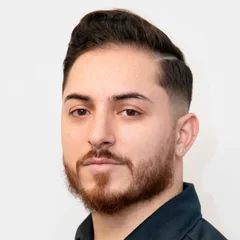
Francis Volpe
Fractional CMO and one of the three Managing Partners of Y Not You. Built Snack Time TV to 500M+ views and 800K+ followers, was named a Top 20 Wunderkind Under 35 in Westchester County, and has been featured on Fox 5 NY.
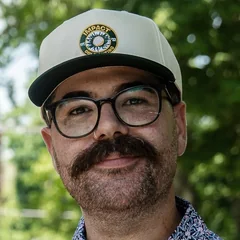
Michael Capozzi
Fractional COO and one of the three Managing Partners of Y Not You. Former Apple Leadership Team, now leading the firm’s AI, automation, and operations advisory. Named a Top 20 Wunderkind Under 35 in Westchester County.
Planning an opening of your own?
Every engagement gets all three Y Not You partners. Tell us your opening date and we will tell you where we would start.
For owners anywhere
The Business Collective
Group-scale access to all three Y Not You partners: a daily knowledge tip, a weekly open-forum call, a monthly networking call, and a quarterly guest speaker.
Join The Business Collective